On February 2, 1972, the city of Sapporo, Japan, became the center of the winter sports world as it welcomed athletes and spectators to the first-ever Olympic Winter Games held in Asia. Nestled on the snowy island of Hokkaido, Sapporo hosted 1,006 athletes from 35 nations, setting the stage not only for thrilling competition, but also for a cultural milestone.
The journey to the Sapporo Olympic Winter Games began weeks earlier and thousands of miles away—in Olympia, Greece. On December 28, 1971, the Olympic flame was lit in the traditional ceremony, and 16,300 young torchbearers—each between the ages of 11 and 20—carried the flame across Greece, Okinawa (then under U.S. administration), and Japan. The route stretched 18,741 kilometers (11,645 miles), making its way to the final torchbearer, 16-year-old Sapporo student Hideki Takada, who ignited the Olympic cauldron during the Opening Ceremony.
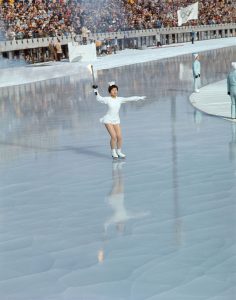
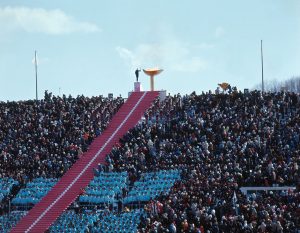
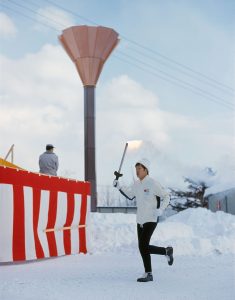
Images provided by the International Olympic Committee.
That cauldron, standing over the Makomanai Speed Skating Rink, was a striking bronze structure with a dusty gold finish. Designed by Japanese designer Munemichi Yanagi, the same artist behind the torch, it symbolized Japan’s modern vision for these Games. Flames from the cauldron were later brought to auxiliary sites at Mount Teine and Mount Eniwa, where they continued to burn throughout the competitions.
The 1972 Sapporo Olympic Winter Games were a turning point in winter sports history. In an article from the IOC, President of the Japanese Olympic Committee, Yasuhiro Yamashita, said:
“Sapporo 1972 changed perceptions of winter sport in Asia. It wasn’t just that Japanese athletes were now competing against Europeans and North Americans; it was also that they were competing in world-class facilities, and that they were winning.”
This was especially true for ski jumping at the 1972 Sapporo Olympic Winter Games. Japan swept the men’s normal hill event with Yukio Kasaya winning gold, Akitsugu Konno winning silver, and Seiji Aochi winning bronze – marking the first ski jumping podium sweep by any nation since 1948 and a historic achievement for Japan.
Sapporo proved that Japan could not only host a successful Olympic Winter Games, but that it could elevate the global stage for winter sports in the region.
Welcoming the 1972 Sapporo Torch To Our Collection
We are excited to share that the Lake Placid Olympic Museum has acquired an original torch from the 1972 Sapporo Olympic Winter Games – an exciting and meaningful addition to our growing Olympic torch collection.
Designed by Munemichi Yanagi and produced by Nikkei Yanagi, the torch’s minimalist design reflects both Japanese craftsmanship and the spirit of modernism that defined the early 1970s. The base of the torch features the inscription “Sapporo 1972” alongside the emblem of the Sapporo Winter Games, while the shape of its black bowl echoes the design of the Olympic cauldron.
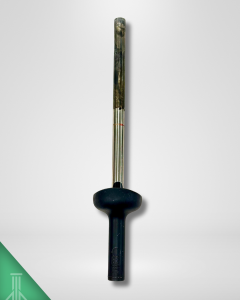
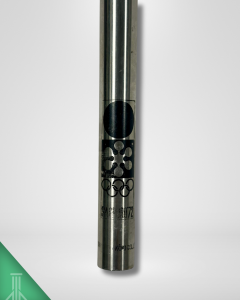
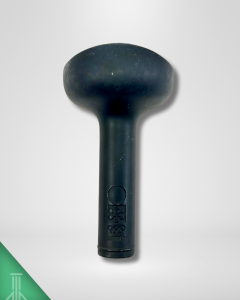
The torch was purchased at auction earlier this year, and it fills a significant gap in our holdings. While we have been fortunate to collect torches from more recent Winter Games, early Winter Olympic torches – especially those from the 1950s through the 1970s – are much rarer and harder to come by. The most elusive Olympic Winter Games torch is from 1960 Palisades Tahoe with only 23 torches reportedly made, and they are rarely seen for sale.
The 1972 torch is particularly special, not only because of its scarcity, but because of what it represents: the first time the Winter Games were held in Asia, a moment that expanded the global reach of the Olympic Movement.
This acquisition strengthens our mission to preserve and share Olympic history, and we’re especially excited to include it in future exhibitions where visitors can trace the evolution of the Olympic torch relay through tangible pieces of its legacy. For a museum rooted in the history of the Winter Games, filling in these early torch gaps is a major step forward—and we can’t wait to share this piece with our community.
Curator’s Corner written by Julia Herman