For more than a century, Wheaties has been much more than just a breakfast cereal; it has become synonymous with athletic success and excellence. Its catchy slogan, “The Breakfast of Champions,” has been wired in people’s brains, but what exactly is so special about Wheaties, let alone to Olympians? Let’s explore the history of Wheaties and its tradition of putting Olympic champions in its classic orange box.
The Birth of Wheaties: A Cereal with a Purpose
Wheaties is a grain breakfast product that entered the market in 1924, manufactured by the Washburn Crosby Company, later known as General Mills. What started as an accidental creation (when a wheat bran mixture spilled onto a hot stove and produced a crispy flake) soon became a popular product marketed as a healthy and nutritious breakfast option. By 1934, Wheaties was already positioning itself as a cereal for the sports world, promoting itself as a healthy breakfast option through its association with athletics and athletes.
Wheaties’ Sports and Olympic Connections
In 1934, Lou Gehrig, the legendary first baseman for the New York Yankees, became the first athlete to appear on the back of a Wheaties box. This was the start of an enduring legacy that would eventually incorporate Olympians.
While athletes in sports like baseball, tennis, football, aviation, and golf frequently graced the back Wheaties box throughout the 1930s and 1940s, it wasn’t until 1956 that Olympians started taking center stage. Track and Field athlete Bob Richards became the first Olympian to be featured on the front of the box after winning back-to-back gold medals in Helsinki in 1952 and Melbourne in 1956. Richards embodied the idea of excellence and the Olympic spirit, and his inclusion on the Wheaties box sparked a new chapter in the brand’s relationship with sports.
This tradition has continued for decades—honoring the world’s top athletes, particularly Olympic champions, who represent the peak of athletic achievement.
Olympian Wheaties Boxes at the Lake Placid Olympic Museum
Since Bob Richards’ groundbreaking appearance, many winter Olympians have been featured on the front of Wheaties boxes, such as Apolo Ohno (speed skating), Lindsey Vonn (alpine skiing), and Shaun White (snowboarding). The Lake Placid Olympic Museum houses a few Wheaties boxes in the collection, featuring athletes from different winter sports, including ice hockey and figure skating.
The 1980 USA Men’s Ice Hockey Team – During the 1980 Olympic Winter Games in Lake Placid, the young U.S. ice hockey team stunned the world by pulling off one of the greatest upsets in sports history: defeating the heavily-favorited Soviet ice hockey team and going on to win the gold medal. The team was featured on the Wheaties box in 1997.
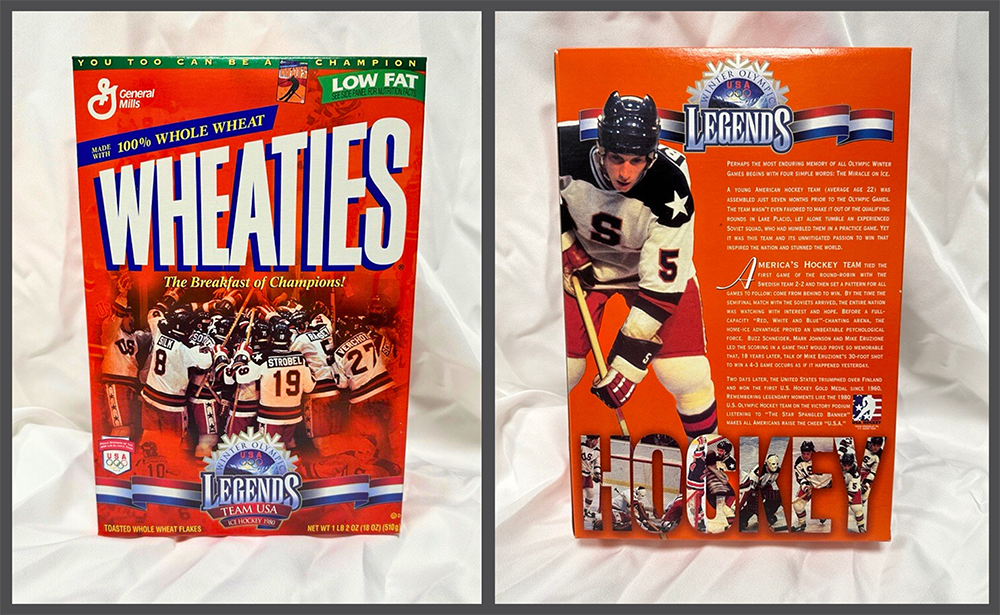
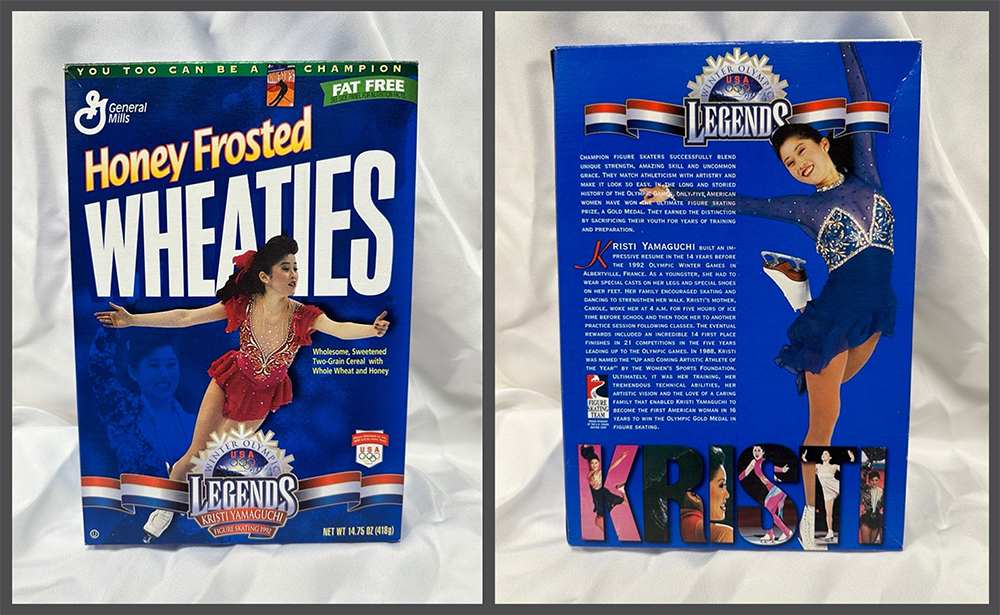
Kristi Yamaguchi – Representing Team USA, Kristi Yamaguchi became the first Asian-American woman to win a gold medal in figure skating at the 1992 Olympic Winter Games in Albertville, France. Outside of her Olympic career, Yamaguchi is a two-time world champion (1991 and 1992) and the 1992 U.S. champion. She was featured on the Wheaties box in 1992.
Wheaties’ tradition of putting Olympians on the box is more than just a marketing strategy. It’s a celebration of what it means to be a champion. For nearly 100 years, Wheaties has been associated with excellence, and by honoring Olympians, it has solidified its place as a cultural icon. Whether you’re an aspiring athlete or simply a fan, when you reach for a Wheaties box, you’re participating in a legacy that celebrates the world’s greatest athletes and the spirit of the Olympic Games.